The Enterprise AI Visibility Gap Behind Shadow AI Risk
After an AI exposure, the hardest question is usually what your organization cannot answer: where AI is active, what was pasted in, and what was shared. That visibility gap turns shadow AI into an incident multiplier.
Article focus
Treatment: photo
Prompt family: BA-1 (high)
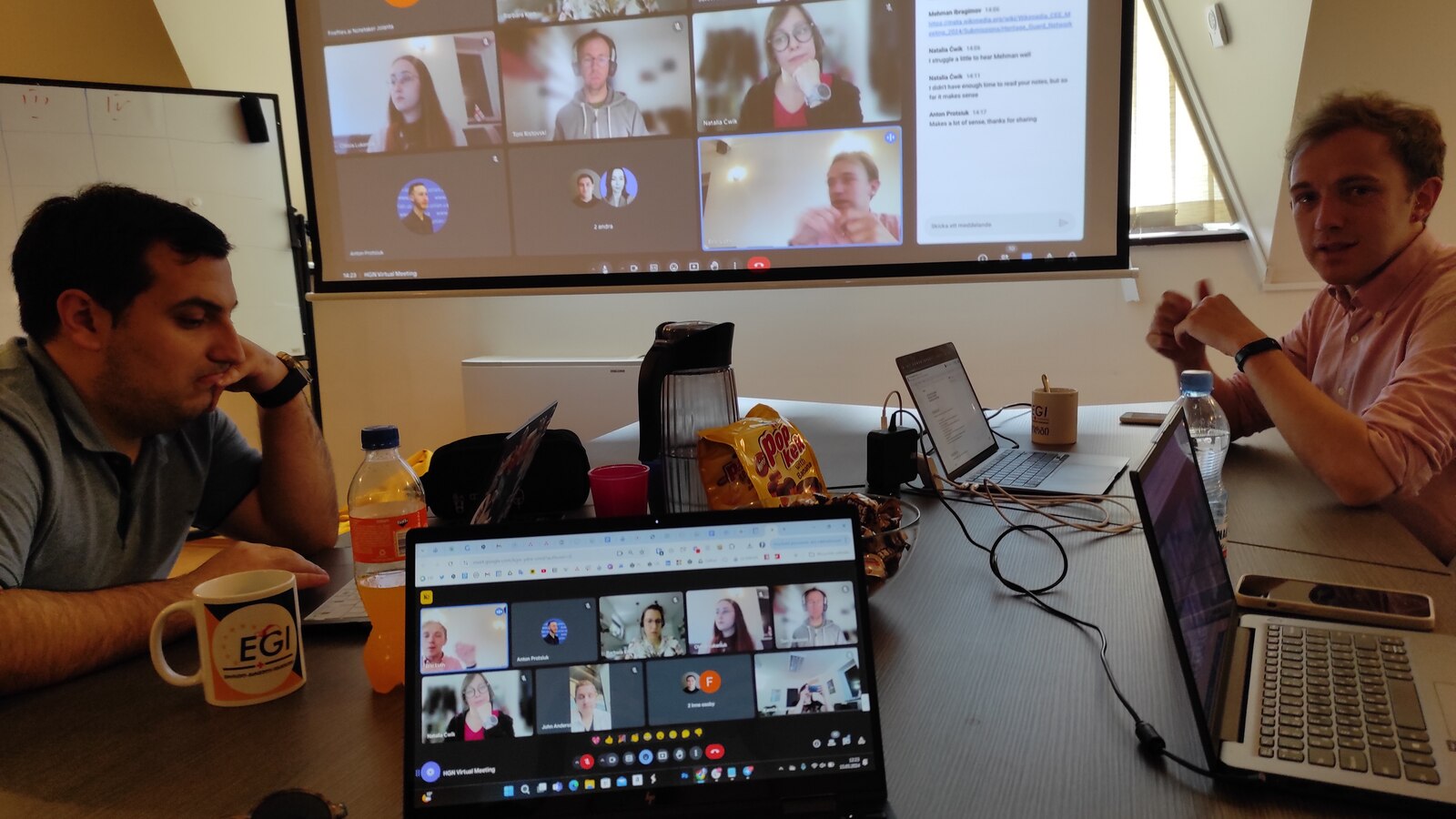
Image description: Workshop participants seated with laptops representing hard-to-inventory AI usage
Image source: OlesiaLukaniuk (WMUA) via Wikimedia Commons
License: CC BY-SA 4.0
Executive summary
The hardest question after an AI incident is usually not what the provider did. It is what your own organization cannot answer: where AI is active, what staff pasted into it, what was shared, and how far that context already traveled.
What the Provider Sources Reveal About Employee AI Use
Across the OpenAI, Anthropic, xAI, and Wiz sources, the pattern is consistent: a prompt, chat, or dataset can become shareable, discoverable, or exposed faster than an enterprise can map who created it, who viewed it, and what sensitive context it carried. Shared-link features turn a conversation into a portable artifact. Public sharing can escape the original workstream. A provider-side exposure can surface far more than the original prompt. None of that is manageable if the organization cannot even see where employee AI use is happening.
That lack of visibility is why AI incidents feel larger than they first look. The transcript is not just text. It may contain copied documents, executive reasoning, compliance questions, customer context, code, screenshots, or instructions that point to other systems, and those details can leave the company boundary through sharing, logging, or downstream reuse.
The Enterprise Problem Is Observability, Not Just Trust
Most enterprises do not know how many AI tools are active across the business, which teams rely on them daily, or what kinds of data are flowing through them. They may know what is officially approved. They usually do not know what is actually in use. That is the observability gap.
Once a chat-related incident happens, that gap becomes the real story. The organization cannot tell whether the transcript contained restricted material, whether it was later shared, whether the assistant had connected access to internal tools, or whether similar behavior is happening elsewhere. Lack of observability turns every exposure into a wider governance problem because the business cannot quickly define the boundary of what was at risk.
Why Shared AI Context Creates a Real Control and Risk Model
Shared links are not neutral convenience features
Visibility is difficult because conversational AI hides state in places traditional controls were not built to watch well: prompts, transient browser sessions, chat history, assistant memory, tool traces, share links, and third-party service logs. The interaction feels informal, so users treat it informally. But the stored context is often richer than a normal support ticket or form field. It can contain intent, reasoning, internal names, and copied data that would be heavily governed in any other system.
Provider settings can change the blast radius without changing user behavior
The system is risky because it accumulates high-value context faster than organizations can inventory it. That means the security problem is not only preventing misuse. It is building enough visibility to know when misuse, oversharing, or unsafe automation is happening at all, then deciding whether the right control is restriction, review, or containment.
Where Organizations Miss the Employee-AI Footprint
The common failure is believing visibility can wait until after rollout. Teams approve a pilot, then another one, then a departmental exception, and soon there are multiple assistants, browser plugins, or connected chat tools operating without shared logs, policy, or ownership. By the time leadership wants answers, the organization is already depending on those tools and no one can produce a clean map of data flows.
Another failure is over-indexing on vendor dashboards. Provider dashboards may show account-level usage, but they rarely tell the organization what mattered semantically: which prompts carried sensitive business context, which conversations crossed policy boundaries, and which events should have triggered review. That leaves security, legal, and operations reading the same incident from different partial records.
How 3LS Turns Visibility Into an Operational Control
3LS turns visibility into an operational control instead of a reporting afterthought. It can surface where AI is active, identify high-risk interactions, classify prompts and copied data against policy, and provide evidence around which workflows need approval or restriction. That makes it possible to govern conversational AI based on what it is actually touching rather than which vendor logo is on the screen.
Visibility matters because it is the prerequisite for every other control. If the organization cannot see where AI is being used and what kinds of data are flowing through it, every assurance from the provider is operationally incomplete. 3LS is the layer that lets the enterprise prove where policy should apply before an exposure becomes an incident.
Operationalize Visibility Before Expanding AI Access
Start with the smallest useful inventory
Build an inventory of approved and observed AI usage. Define the small set of events that must be visible to security and risk teams: sensitive-data prompts, public sharing, connected-tool usage, and policy exceptions. Then use that visibility to decide where approvals, restrictions, or compensating controls belong.
Use the inventory to separate routine use from risky use
You cannot govern the blast radius of AI if you cannot see the shape of the system that is already in use. The first practical step is not blanket prohibition. It is a defensible map of where employee AI use is already creating enterprise exposure.
Continue reading